Free, plain-language cancer education

Understand cancer earlier. Ask better questions. Feel more prepared.

OncoGx™ helps people understand cancer risk, symptoms, screening, and diagnostic tests in plain language — so they can seek timely care and have more informed conversations with their healthcare provider.

Education, not diagnosis Sourced and reviewed No tracking of your answers

Why awareness matters

Many cancers are more treatable when found early

Noticing a change that doesn't go away, knowing what screening can and can't do, and asking clear questions can all help people get the right care sooner. Awareness is about confidence, not fear.

Why awareness matters
20million

new cancer cases worldwide in 2022

Source: WHO / IARC, GLOBOCAN 2022 (published February 2024)
38%

of cancers could be prevented by avoiding risk factors and using existing prevention strategies

Source: WHO cancer fact sheet
10%

of cancers diagnosed in 2022 were linked to infections such as HPV and hepatitis B and C, many of them preventable by vaccination or treatment

Source: WHO cancer fact sheet
400,000

children and adolescents aged 0 to 19 develop cancer each year: cancer is not only a disease of older age

Source: WHO cancer fact sheet

Start here

A five-step learning path

New to all this? Work through the basics at your own pace. Tick each step as you go; your progress stays on this device.

0 of 5 steps complete
01

Why awareness matters

Five minutes on noticing changes without fear.

02

Know the signs

Changes worth discussing, and when not to wait.

03

Understand risk

What you can change, and what is nobody's fault.

04

Screening basics

What it can find, what it can miss.

05

Tests and next steps

From scan to biopsy to report.

Symptom awareness

Changes worth talking about

These can have many causes, and most are not cancer. If a change persists, worsens, or comes with other concerning signs, speak with a healthcare professional.

Explore all symptoms
Book an appointment

A lump in the breast, neck, armpit, testicle, groin or elsewhere that is new or has changed.

Breast & chest · Head & neckLearn more
Book an appointment

A cough lasting three weeks or more, a changed cough, or hoarseness that does not settle.

Lungs & breathing · Head & neckLearn more
Book an appointment

Blood in or on your stool, black stools, or looser, more frequent or harder-to-pass stools for several weeks.

Abdomen & digestionLearn more
Book an appointment

Losing weight without trying, often with a reduced appetite.

Whole bodyLearn more
Book an appointment

A mole that changes size, shape or colour, bleeds or itches, or a sore that does not heal after several weeks.

SkinLearn more
Book an appointment

An ulcer, lump, or red or white patch in the mouth that lasts more than three weeks.

Head & neckLearn more

Myth vs fact

Six common beliefs, checked

Tap a card to reveal what the evidence says, with a source for each.

More myths
Myth

Cancer always runs in families.

Is this true? Tap to see what the evidence says.

Myth

If I have symptoms, I definitely have cancer.

Is this true? Tap to see what the evidence says.

Myth

Screening finds every cancer early.

Is this true? Tap to see what the evidence says.

Myth

Tumour markers diagnose cancer.

Is this true? Tap to see what the evidence says.

Myth

Only older people get cancer.

Is this true? Tap to see what the evidence says.

Myth

A biopsy makes cancer spread.

Is this true? Tap to see what the evidence says.

Revealed 0 of 6 facts.

Appointment prep

What should I ask my doctor?

Choose what your appointment is about and we'll suggest clear questions. Add your own, then copy, download or print them.

1. What is your appointment about?

2. Anything else to cover? (optional)

Your choices stay in your browser. Nothing is sent to OncoGx™.

Questions about a symptom

For an appointment about a symptom or change you have noticed. Untick any you don't need.

Free resources

Watch, download and share

Interactive films, guides, checklists and posters, free for education and community use.

Browse the library

Resource of the month

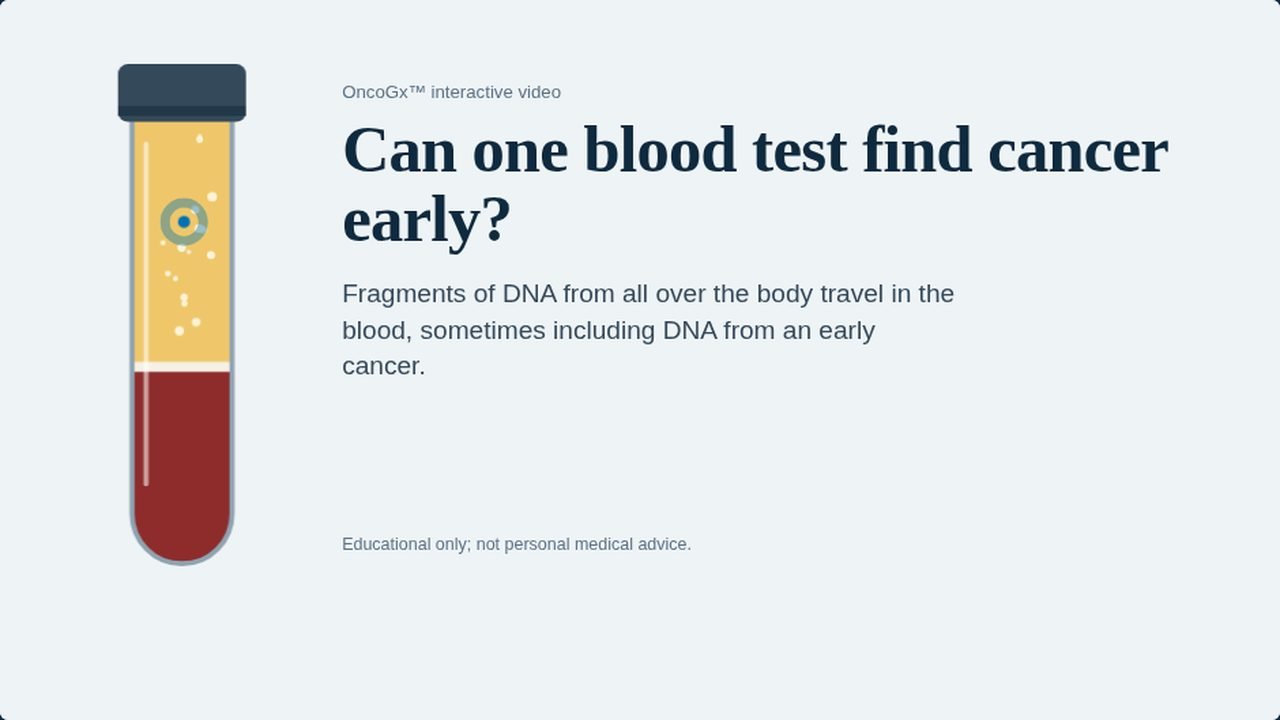
Can one blood test find cancer early?

A 10-minute interactive video on multi-cancer early detection (MCED) blood tests, with a 60-second trailer. It explains the five signals these tests read, why a signal is not a diagnosis, what positive predictive value means, and what should happen after a positive result.

Watch the interactive videoAbout 10 minutes, plus a 60-second trailer

NewReviewed
Interactive film 12 min
Public, Students, EducatorsEnglish26 Sep 2026

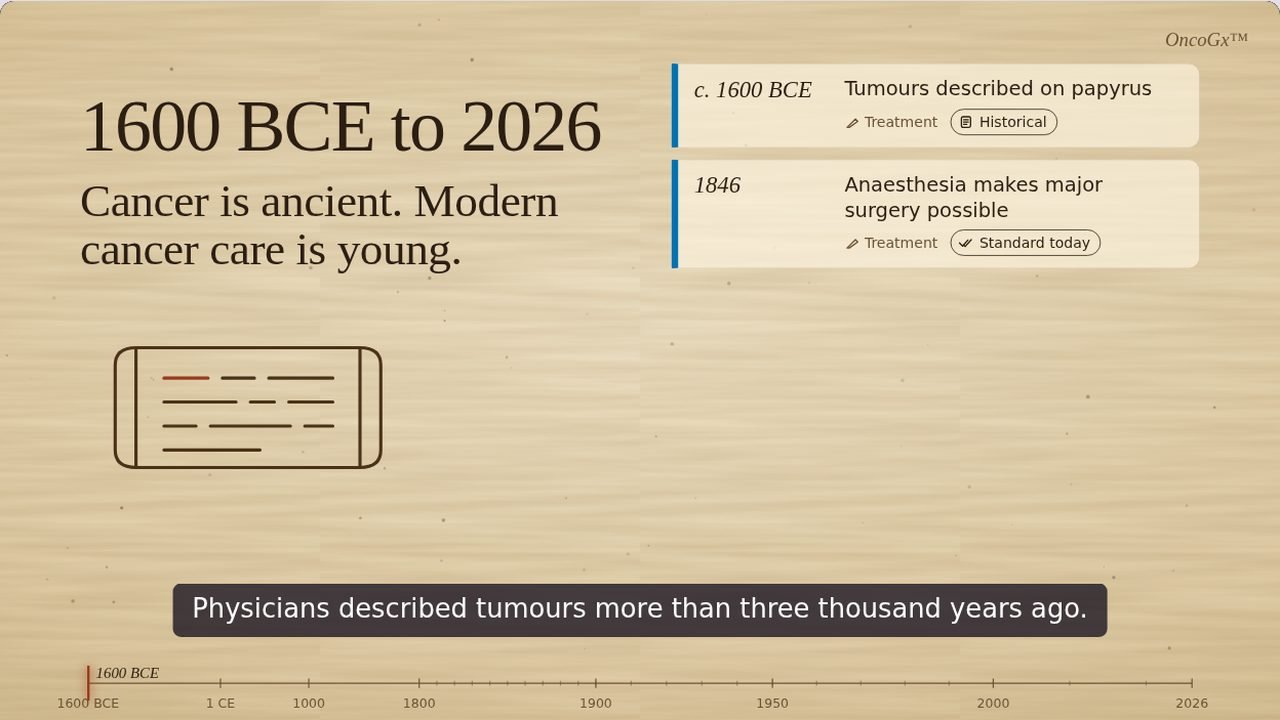
The Story of Cancer in 20 Slides

An interactive film that travels from ancient papyrus to tumour DNA in a blood sample in twenty slides. It pauses for five challenges so viewers can…

HistoryTreatmentScreening
NewReviewed
Interactive film 18 min
Public, Patients, CaregiversEnglish26 Sep 2026

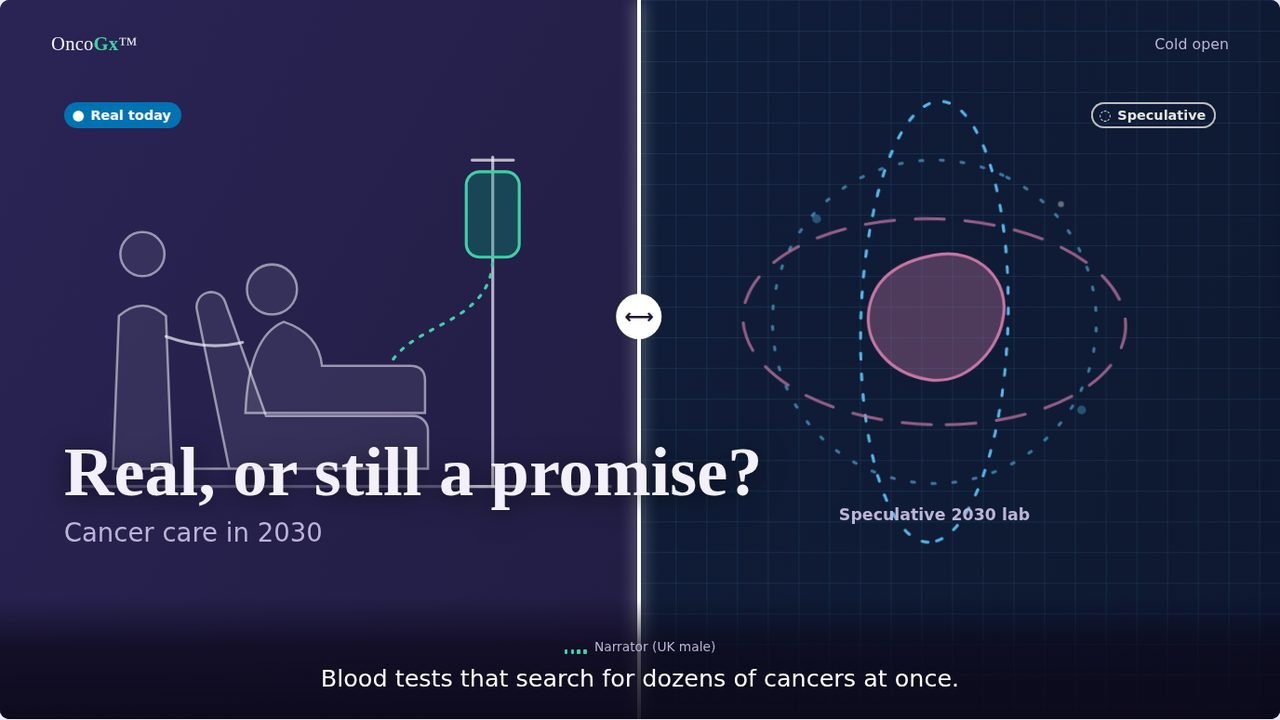
Cancer Care 2030: real, next or not yet?

An 18-minute interactive film on the future of cancer care and why supportive care is treatment. Viewers sort twenty emerging technologies by how…

Supportive careTreatmentSurvivorship
New
PDF guide 4 pages
Public, Patients, Community health workersEnglish26 Sep 2026

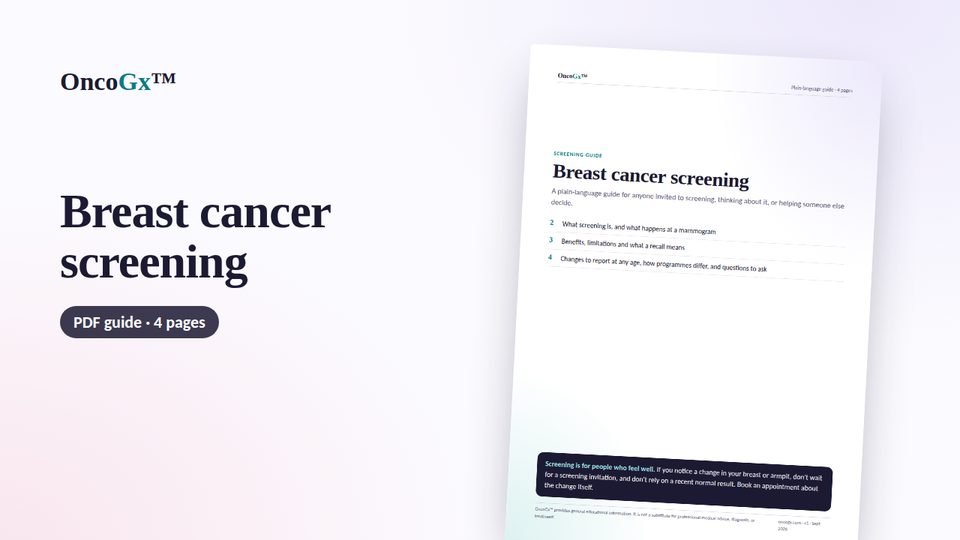
Breast cancer screening: a plain-language guide

A four-page guide to breast screening: what a mammogram is and what it feels like, benefits and limitations, what a recall means, knowing what is…

BreastScreening

Stories & community

Real experiences, shared with care

Stories are moderated and shared with consent. The three below are illustrative examples of the format.

Read patient stories
Screening experience
“I thought a recall meant bad news. It meant they wanted a clearer picture.”

The letter I almost ignored

A first screening invitation, a recall, and the week of waiting that followed.

Caregiver experience
“Nobody hands you a manual for caring. I had to learn to ask.”

Learning to ask for help as a carer

Looking after a parent through treatment, and the moment the carer realised he needed support too.

Young adult cancer
“Going back a second time felt awkward. I'm glad I did.”

"You're too young to worry about that"

A lump that did not go away, and learning to go back when something still felt wrong.

Trust and safety

How we earn your trust

Health information should be careful, clear and honest about uncertainty. Here is how we work.

Editorial standards

Plain language, named sources, and no hype. We explain what evidence shows and where it is still uncertain.

Editorial policy

Content review

Medical content is checked against current guidance and reviewed on a schedule. Each resource shows its review status.

Review process

Privacy first

Our tools run in your browser. We don't sell data, and saved items stay on your device.

Privacy notice

Accessible to all

Designed for keyboards and screen readers, with captions, readable fonts and strong contrast.

Accessibility

Questions

Frequently asked questions

Can OncoGx™ tell me whether I have cancer?

No. OncoGx™ is an education and awareness resource. It cannot examine you, diagnose anything or tell you whether a symptom is serious. It can help you understand what you are experiencing and prepare questions for a qualified healthcare professional.

I have a symptom and I'm worried. What should I do?

Many symptoms have causes that are not cancer, but a symptom that is new, lasts more than a few weeks or keeps getting worse deserves a check. Book an appointment with a doctor or health worker. If symptoms are severe or getting worse quickly, such as difficulty breathing, chest pain, heavy bleeding, confusion or fainting, seek emergency care.

What is the difference between screening and a diagnostic test?

Screening tests people who feel well and have no symptoms, to find cancer or pre-cancer early. Diagnostic tests are used when there is a symptom or an abnormal result, to find out what is causing it. If you have a symptom, you need a diagnostic assessment, not a screening appointment.

Is there one blood test that can find all cancers?

Not yet. Multi-cancer early detection blood tests are being studied in large trials. They can miss many cancers, can give false alarms, and have not been shown to reduce cancer deaths. They do not replace recommended screening. Watch our interactive video Can one blood test find cancer early?

Does OncoGx™ store what I type into the tools?

No. The symptom explorer, screening checklist and question generator run entirely in your browser. We do not send your answers anywhere. Saved items and your theme choice are stored only on your own device and you can clear them at any time.

OncoGx™ provides general educational information about cancer awareness, risk, screening, and diagnostics. It is not a substitute for professional medical advice, diagnosis, or treatment.

Try , , or . Press Esc to close.